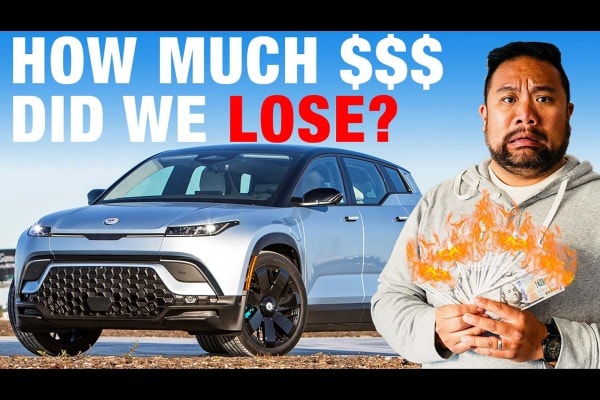
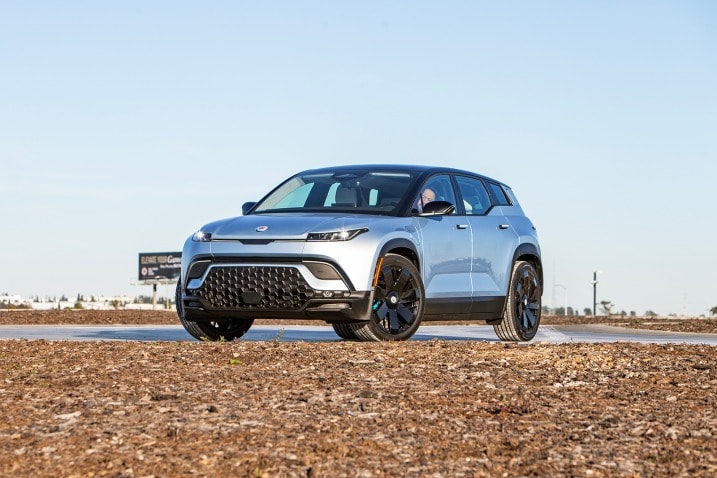
In what's shaping up to be a trend in the alternate-fuel startup world, Fisker has just announced layoffs of 26 employees from the brand's Delaware factory. Those let go were made up, in part, of employees set to help make Project Nina -- the company's second vehicle -- a reality.
"It's temporary," Roger Ormisher, Fisker Spokesman, said. "We're being prudent and sensible as a company."
Fisker, the recipient of $193 million in government funding, has delivered between 250 and 300 Fisker Karmas thus far and has managed to raise over $650 million in private-sector funding. The DoE isn't worried about their (our) investment, though, "Our loan guarantees have strict conditions in place to protect taxpayers...As Fisker works through those issues and incorporates lessons learned from the production of the Karma, the Department is working with Fisker to review a revised business plan and determine the best path forward so the company can meet its benchmarks, produce cars and employ workers here in America," said DOE spokesman Damien LaVera. Fisker has asked the DOE to revise its targets.
Fisker doesn't have the funding (read: uber-rich CEO) that Tesla does, will we ever see Project Nina?
Categories: Auto Industry,Fisker,Hybrids
The 4th quarter of the 2012 Super Bowl was uncomfortably close and those people not throwing chowder all over the room were likely looking up the Cadillac ATS.
We've covered the first three quarters, here's how tonight's Super Bowl commercials impacted activity to Edmunds.com in the 4th.
Continue reading...
Categories: Auto Industry,Miscellaneous
Halftime saw one of the most anticipated ads of the 2012 Super Bow: Chrysler's two-minute, Clint Eastwood-narrated "Halftime in America" commercial. The spot aired at the end of the halftime activities and gave Chrysler a 13% activity increase.
The third quarter had one break-out star.
Continue reading...
Categories: Auto Industry,Miscellaneous,Videos
As we told you previously, we're following the real-time impact that 2012 Super Bowl car advertisements are having on Edmunds.com. See what happened in the 1st quarter and the pregame show here, and follow the jump to see how the second quarter stacked up.
Continue reading...
Categories: Auto Industry,Miscellaneous
We all know how much time and money manufacturers have put into advertising for the Super Bowl. As fun as they are, the goal here isn't to entertain us, it's to sell cars.
To try and monitor the effectiveness (as opposed to the entertainment value) of the ads, Edmunds is tracking in real time the impact the ads are causing our site.
Details after the jump.
Continue reading...
Categories: Auto Industry,Miscellaneous
When January auto sales were tallied earlier this week, sales for the broad industry were up 11 percent and analysts and industry watchers were encouraged by what appears to be steadily improving health for the U.S. auto business. But January's sales numbers also showed some intriguingly bad numbers for many interesting cars.
The thought process started with the 2012 Volkswagen Beetle, which went on sale sometime around October last year and evolved into one of the most buzz-less launches for a specialty car we can recall. Volkswagen had its best January since 1974 -- sales were up 47.9-percent to 27,209-- and the company might be pleased with the comparative sales increases for the butched-up new-generation Beetle, but the Beetle's raw sales numbers are pretty weak: 1,401 for the month.
The Beetle's January sales performance was a 417-percent leap compared with last January, at least. And maybe VW's pending launch of its MQB architecture heralds a safe future business case for low-volume specialty cars throughout the industry?
Here are the January sales results for a few other cars -- many some of our favorites -- that are selling at worryingly lame pace:
Continue reading...
Categories: Auto Industry,Miscellaneous
In case you haven't been following the case of Heather Peters vs Honda, here's the breakdown: Peters owns a 2006 Honda Civic Hybrid that, like all of these cars, is not getting the advertised mileage. Peters, an attorney, opted out of the class action suit and instead filed her own suit against Honda in small claims court. Small claims court in this case would give Peters -- and future Civic owners who sue Honda -- a higher payout than the class action suit. (The class-action suit will settle for between $100 and $200 per person and a $1,000 credit towards a new car purchase -- lawyers will take home about $9,000,000.)
But lawyers aren't allowed in small claims court. Los Angeles Superior Court Commissioner Douglas Carnham agreed with Peteres and said that "Honda was aware...by the time Peters bought her car there were problems with its living up to its advertised mileage," and awarded her $9,867.
Peters has set up a website, dontsettlewithHonda.org, to try and convince the other 200,000 2006 Civic Hybrid buyers to opt out of the class action and go to small claims court. It's a move that could cost Honda up to $2 billion.
But that's where this gets murky. Courts don't like settling the same case over and over and over again, that's why class action suits exist. And if Honda appeals this decision -- something they will HAVE to do to stop this from setting precedent -- it will go to a real court with real lawyers and a real judge. That case, when it comes, will be much harder to win.
Categories: Auto Industry,Honda
There was some upsetting news last August about the decision in USA V. Pineda-Moreno. The decision by the Ninth Circuit Court of Appeals on August 12, 2010 said, in essence, that if the police want to put a GPS tracking device on your car they are free to do so.
The case was complicated on the side of privacy by curtilage laws (what areas are considered private and which public) and by simple class discrimination: Rich people can park in a garage or behind a gate, poor people cannot (**dissent quote from the original ruling after the jump). On the other side of the argument is that a GPS tracker is pretty much just a fancy surveillance squad. We can send a team of cops to follow you 24/7 without a warrant why not save the manpower and do it electronically?
Today, however, things took a turn for the reasonable as the United States Supreme Court has ruled on a related case, United States V. Antoine Jone. Jones had been tracked for four weeks in 2005 when a GPS unit transmitted some 2,000 pages of data to this police about his car's every movement. Jones' claim was that his rights had been violated both by the application of the device and the monitoring without a warrant.
The Court voted unanimously that Jones' Fourth Amendment right had been violated. Justice Scalia wrote the opinion of the court, "The Fourth Amendment provides in relevant part that '[t]he right of the people to be secure in their persons, houses, papers, and effects, against unreasonable searches and seizures, shall not be violated.' It is beyond dispute that a vehicle is an 'effect' as that term is used in the Amendment....We hold that the government's installation of a GPS device on a target's vehicle, and its use of that device to monitor the vehicle's movements, constitutes a 'search,'" Roberts, Kennedy, Thomas and Sotomayor joined the Scalia opinion that says placing the unit on the car constitutes search.
Justice Alito concurred in judgment but broke from the majority opinion. (This is where it gets fun.)
Continue reading...
Categories: Auto Industry,Miscellaneous

The newest chapter of the Never Ending Saab Story reveals a new, surprise twist in the plot. At the end of the last chapter we had Chinese firm Youngman maintaining interest that despite the bankruptcy and the crushed cars and the fact that GM won't allow any Chinese firm to own/have access to any of their intellectual property. If this is Saab's only option, they're sunk.
Now, though, we've got word that a Turkish equity fund, Brightwell Holdings, is going to make a run at the Swedish brand. "We will make a bid very shortly, there's no question," said Zamier Ahmed, board member with Brightwell. The Istanbul-based investment group is big on investments into transportation and energy.
Let's see how GM feels about the Turks.
(Automotive News)
Categories: Auto Industry,Saab

A recent study by Deloitte finds that 6 in 10 Millennials would prefer to buy a hybrid over any other type of vehicle.
Deloitte surveyed 1,500 drivers from Gens Y, X and Baby Boomers. 250 of these were Millennials -- people between the ages of 19 and 31 -- from China and 300 from Western Europe. According to Deloitte, Gen Y will buy one of four cars this year. "Gen Y consumers also view hybrid technology as proven and reliable.... Gen Y is familiar and comfortable with hybrid technology, but not so much with battery-only technology." said Craig Giffi of Deloitte. Only 2% of those responding said they would consider a pure EV.
But just being a hybrid isn't good enough. 59% said the most important part of a vehicle's interior is the in-dash technology with 75% preferring a touch-screen interface. 72% want in-dash apps. Continuing the depressing news, Millennials surveyed listed safety bundles -- collision warnings, blind spot detection, sleep alert-- as the second most desirable thing in a car.
As a millennial, I'm both horrified and completely unsurprised by the results of this survey. I still want a big motor with no traction control.
Categories: Auto Industry,Hybrids
Back in December a Swedish court declared Saab bankrupt after a deal couldn't be reached with a number of Chinese auto makers. The stumbling block was General Motors. Simply put, they didn't want their intellectual property in the hands of anyone who could compete with them in China.
Now, a "source with knowledge of the process" has confirmed to Automotive News that Youngman's still in the game and will be throwing up another bid for Saab next week. The deal is allegedly worth "several billion Swedish crowns" with 1 krona = 0.14 USD.
No information was provided for how this deal would be different than the other ones that were shot down by GM, but a lawyer representing Youngman said that they would not be developing products controlled by GM. The PhoeniX platform (pictured above) uses very little GM technology, but is still very far away from being a developed, road-ready car. Ie: It needs a lot more time and money.
Last week Saab crushed a number of vehicles either on or fresh off of the production line and put the Saab museum up for sale.
(Automotive News)
Categories: Auto Industry,Saab

Following a similar report by NHTSA, the National Research Council has found that that the electronic throttle-control systems were not the cause of the rash of Toyota accidents in '09-'10.
Part of the report read, "While untraceable electronics faults may be suspected causes of unintended acceleration, this explanation is unsatisfactory when the driver also reports experiencing immediate and full loss of braking. However, such reports are common among complaints of unintended acceleration, and NHTSA attributes them to pedal misapplication when investigations offer no other credible explanation for the catastrophic and coincidental loss of braking."
Read the full story here.
Categories: Auto Industry,Toyota,Toyota Recalls
Because if you don't have a song, you don't have an argument.
Continue reading...
Categories: Auto Industry
This is like one of those "Call now and buy six and we'll send you two free!" offers you see on late night TV when you can't sleep and re-runs of House finally stop. One of Malaysia's largest corporations, DRB-Hicom is an automobile manufacturing conglomerate who runs assembly plants and handles distribution for, amongst others, Honda, Volkswagen and Mercedes Benz in Malaysia. And soon they will own a 43% share of Proton and get Lotus essentially for free.
Continue reading...
Categories: Auto Industry,Lotus

Peter Rawlinson and Nick Sampson, prominent engineers on Tesla's 160-to-300 mile range electric sedan have left Tesla before seeing their baby to launch.
Rawlinson was Tesla's vice president and Chief Engineer while Sampson supervised the company's chassis engineering. The two left earlier this month. "Having completed conceptual and design engineering work on Model S, Peter has decided to step away to tend to personal matters in the U.K." said an emailed statement by Ricardo Reyes, Tesla spokesman. Sampson was noted as having already fully transitioned off of Model S when he left. Jerome Guillen (formerly of Daimler AG) and Eric Bach (formerly on VW small cars) have filled the open positions.
The market was not convinced by the words or actions of Tesla, shares in Tesla's stock fell 20 percent.
Is this just a case of businesses doing what they do? Or is the departure of two key executives in the final stretch of a huge launch indicative of things to come from the Model S?
(Bloomberg)
Categories: Auto Industry,Electric Vehicles,Sedans,Tesla Motors

With the introduction and relative success of the Nissan Juke in the U.S. market, we really had our hopes up that this funky little crossover could be the gateway design to start bringing French cars into the states. Sure, it's no first-gen Fiat Multipla, but the Megane is a visually interesting little car (that happens to be quite fast), and the Kangoo and Clio would certainly spice up the compact van and hatch categories. And then there's the Wind Roadster. Because, well, why not?
Well, why not is because Carlos Ghosn doesn't want to. More than doesn't want to, Carlos Ghosn is using "facts" and "statistics" to support his decision to focus on Renault's introduction in China. When pressed on the U.S. he said it would not return "in the foreseeable future."
Though, really, with the difficulty that Fiat is having reintegrating with normal American society, maybe we're just not ready for French, err, Freedom Cars. And if the Italians can't sell a stylish compact in the U.S., good luck to the French trying to sell a vehicle called the Traffic Generation.
(Detroit News)
Categories: Auto Industry,Renault

In an announcement that focused around the BMW's decision to invest $900 million (and 300 new jobs) into their plant in Spartanburg, South Carolina, BMW also announced that the X4 will be built here in the U.S. for 2014. BMW wants the plant to kick out more than 350,000 cars by 2014 and the X4 is key to that growth.
The plant is already the home of BMW X3 production and it makes sense that the company will build the X4 there as well. The X4 will be available with the same powertrains as the X3.
The Spartanburg facility employs more than 7,000 people and built 276,065 cars last year.
Categories: Auto Industry,BMW,Crossovers
If you're at all suspicious about Honda's seriousness about bringing the NSX back to life, consider this: Honda's CEO, Takanobu Ito, who presided over the reveal of the NSX concept, took a moment to recall his first big project at Honda.
He worked on the team that developed the all-aluminum chassis of the very first NSX, a job he called the most important project of his life at that point. He even pulled up a shot of the team in front of their big project. It was a nice reminder that the top executive at Honda is still very much an enthusiast. Hopefully his influence rubs off on more than just the NSX.
Continue reading...
Categories: Auto Industry,Detroit Auto Show,Honda

"Between 1980 and 2006," the MIT report begins, "the average gas mileage of vehicles sold in the United States increased by slightly more than 15 percent -- a relatively modest improvement."
The study by MIT economist Christopher Knittel seems silly to most of us; we KNOW the answer here. Without looking at the spoiler photo above, those of you reading Inside Line, who've spend more man-hours researching car information for fun than Knittel ever will for his profession, know why our fuel economy numbers haven't risen as high as they could.
Continue reading...
Categories: Auto Industry,Pontiac
The press release read, "As provided in its June 10, 2009 Operating Agreement, Chrysler Group issued a letter to the U.S. Department of the Treasury stating that the Company has irrevocably committed to begin assembly of a vehicle with an unadjusted combined fuel economy of at least 40 mpg in commercial quantities in a production facility located in the United States."
And,
"In late December, Chrysler Group achieved the Fuel Economy Test, for an unadjusted combined rating of 40 mpg, with a pre-production version of the Dodge Dart, its new, state-of-the-art, four-door sedan."
So does this mean that you'll see a big, fat '40' on the window sticker of the 2012 Dodge Dart? Uh, no.
Continue reading...
Categories: Auto Industry,Dodge,Future Vehicles,Sedans