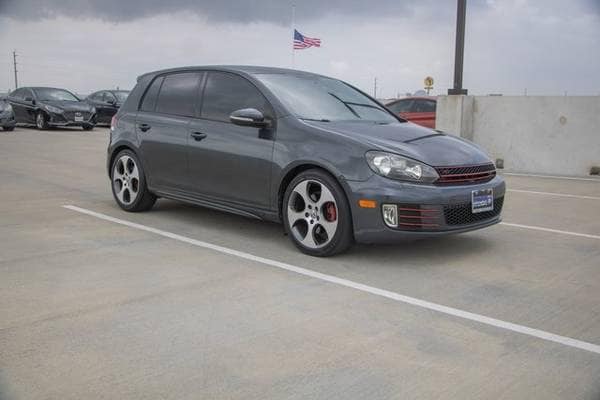
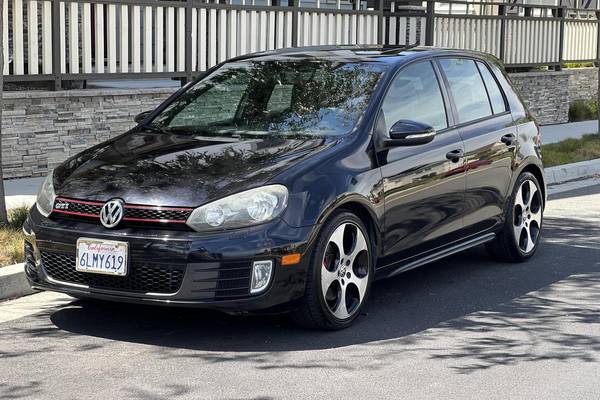
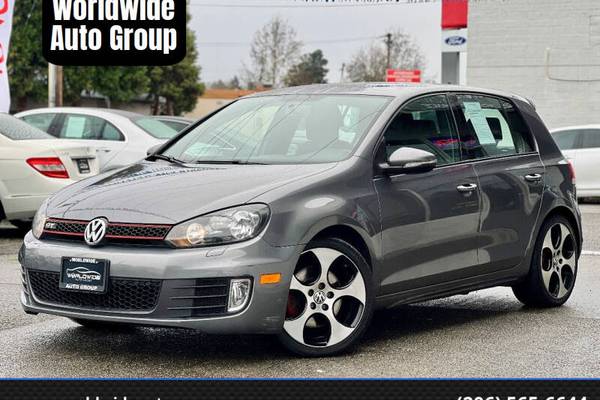
A few weeks back, one of our editors filled our longterm 2010 Volkswagen GTI's tank with 87 octane. Whether VW intended for this to happen or not, reality has a way of rendering such things moot.
Then we had a bright -- if obvious -- idea: let's do a dyno test to quantify just how much power this little hatch loses as a result of the lower octane.
It went down like this: We ran that tank of 87-ish octane down to nearly empty and refilled with 87 to ensure that the only thing in the tank was 87 octane. That, and it would give the electronic German brain on board adequate opportunity to recalibrate itself for the lower octane.
Then we dynoed it, performing as many runs as necessary to achieve a stable and consistent result.
Afterwards, we ran that tank down and refilled with 91 octane (that's the highest we get for premium fuel here in California), ran that tank down and refilled again with 91. Same logic as before.
We hit the dyno rollers again a few days later. Here's the result:
Peak Power (hp) Peak Torque (lb-ft)
91 octane 207 219
87 octane 203 216
Peak numbers don't tell the whole story, as the largest observed differences at any given engine speed were 10 hp and 11 lb-ft.
In summary, 87 octane hasn't had a tremendous effect on our GTI's ability to hustle. Surprised? I was. I expected a larger difference than this.
It's likely that although the output is similar, exhaust gas temperatures may not be, as less ignition timing can be run with 87 octane. As a result, there might be:
- more enrichment on 87 octane, degrading full- or near-full-load fuel economy
- less altitude margin with 87 octane, and a greater power difference might be observed at high elevation. Sorry, I don't plan on repeating this test in Denver.
Note that modern engine controllers are quite adept at monitoring knock activity and adjusting accordingly. I heard not a single ping when running the snot out of this car on the dyno in either test. If you put 87 octane in your twenty year-old turbo car and gave it the wood, you might make engine soup.
Speaking of dynos, we dyno-tested our GTI on 91 octane last year, so why re-test it? I wanted to ensure similar weather conditions between the two octane dyno tests to eliminate that as a variable to the extent that I could. There are certain things that are still beyond my control, and weather is one of them. Across these two dyno test days, the temperature was within 9 degrees and ambient pressure was within 0.04 in Hg. That's about as close as anyone could ask for.
Weather has a different effect on modern turbocharged cars than it does on supercharged or normally aspirated cars. Here's why: power depends largely on the airflow rate into the engine. Turbo cars have the unique ability to regulate that airflow independently of ambient air density -- unlike non-turbo engines, turbo'd ones can actively manipulate boost pressure so that the same amount of flow enters the engine over a very broad range of ambient conditions. There are limits to this, of course, but the upshot is that turbo engines don't suffer nearly the power loss of a non-turbo engine when, say, climbing a long grade.
Temperature, however, does affect how much timing a turbo engine can run (due to knock), so in that respect weather has an indirect affect on the output of a turbo engine. The thing is, weather correction factors only account for density changes, which is why SAE does not apply weather correction to turbocharged cars, and neither do we.
--Jason Kavanagh, Engineering Editor

kevm14 says:
05:59 PM, 04/26/11
Geez, VW, underrate much?
Also, those results are cool. I may just try 87 at my next fuel up if I dare...
acbayard says:
06:20 PM, 04/26/11
Did you have an opportunity to measure fuel consumption? Refueling with 87 octane to save $?
uncanny_man says:
06:23 PM, 04/26/11
First off, what is the precision of the dyno? I wonder if the octane difference may not even be observable compared to the variation between runs.
Second, holey cow VW underrated that engine! That's got to be closer to 240 hp at the crank!
cr_driver says:
06:30 PM, 04/26/11
That`s their trademark with this engine!
firstwagon says:
06:43 PM, 04/26/11
"If you put 87 octane in your twenty year-old turbo car and gave it the wood, you might make engine soup. "
Depends on the old car I guess. My dad used to alway put regular in his 86 LeBaron GTS Turbo. It didn't do any harm but you could really feel it retarding the timing. Knock sensors have been around for a long time.
yellowperil says:
06:43 PM, 04/26/11
Nice job, and pleasantly surprising! Care to repeat the experiment with other vehicles that recommend premium?
sideswiper says:
06:54 PM, 04/26/11
This is why we read InsideLine's Long-Term Road Test Blog.
kevm14 says:
06:55 PM, 04/26/11
I am looking at a stock 05 CTS-V engine calibration in HP Tuners. I copied the high octane table and low octane table into excel and did a subtraction. If I assume the high octane table is used when the car is run on 93, and the low octane is used on 87, then it runs a LOT less timing on 87. It reduces the timing by anywhere from 6 to 12°. But since 87 burns faster, you don't necessarily lose power. This VW can't really be used as a straight example of what happens to engines as octane and timing changes because the turbo complicates matters. For all we know it may add boost to obtain a consistent calculated output.
tjpark01 says:
07:05 PM, 04/26/11
I have suspected this for quite some time. I chuckle when I see someone putting 91 in a Civic. I have been putting 87 in my Lexus LS, and can't tell any difference. If I had some gnarley turbo, direct injection car, then I would buy the premium. For everyone else, especially considering premium gas is almost pushing towards 5 bucks in LA, you're wasting your money.
Jason Kavanagh replied to comment from kevm14
07:07 PM, 04/26/11
Correct, the results here are not universal to all engines. Just this one.
As for 6-12 deg, that will have a huge effect on output. It will completely eclipse the burn rate effect of octane, which is comparatively small.
Murtman says:
07:07 PM, 04/26/11
So, 207 hp at the wheels equals what, a conservative 238 hp at the crank? (figuring a 15% loss) Yeah, that's some nice under reporting, VW. Hey, whatever works to get me that lower insurance rate. Sign me up.
kevm14 says:
07:16 PM, 04/26/11
@Jay
We shall see. Of course I probably won't get the car dynoed to really find out, unless you count the butt dyno.
Word is my car gets the same highway mileage on 87. I'm curious how many of my 400hp I'd end up sacrificing. Though it seems to me the burn rate of octane is actually fairly major. And doesn't 87 have more BTUs per volume than 93 or whatever it is you guys call premium?
dougnash2009 says:
07:19 PM, 04/26/11
That's a great experiment. It would be awesome if you could try the same thing with a number of different cars. Especially, the high-compression performance cars. Would be really interesting to see some more output comparisons.
huyracing says:
07:22 PM, 04/26/11
the power thing is nothing new people... do some research or actually give a car a test drive before dismissing it. i am guilty of pre-judging, i laughed at this thing when it first came out and was presented to me at a track... i had my mighty 227hp WRX and 200hp sounded ridiculous. i drove it later and was blown away... well, the reality is my WRX dyno'd for 160whp stock... and this thing dyno's for over 200whp stock.
huyracing says:
07:23 PM, 04/26/11
the power thing is nothing new people... do some research or actually give a car a test drive before dismissing it. i am guilty of pre-judging, i laughed at this thing when it first came out and was presented to me at a track... i had my mighty 227hp WRX and 200hp sounded ridiculous. i drove it later and was blown away... well, the reality is my WRX dyno'd for 160whp stock... and this thing dyno's for over 200whp stock.
jm1212 says:
07:27 PM, 04/26/11
that underrating is exactly why the cars making "200 hp and 207 lb-ft" feel so much quicker than other cars that actually make similar stats at the crank.
louiswei says:
07:31 PM, 04/26/11
Just filled up my car today, here in Torrance the 91 is at $4.359/gallon and the 87 is at $4.159/gallon (difference is $0.200). Assuming that one drives 12000 miles per year with 22 mpg, the difference between filling up with 91 and 87 is $110/year.
$110/year guys!!!
Please don't tell me that you can afford a $40k+ luxury car but can't afford the extra $110 per year. Seriously, if your car calls for premium then PUT IN PREMIUM. If you have to budget for that $110 per year then I am afraid to say that you are probably over stretching yourself with that car.
jackson611 says:
07:43 PM, 04/26/11
@kevm14:
The lower octane would have more BTUs per given volume amount vs. a higher octane. Auto gasoline is made of natural gasoline (which is around 50-65 octane) and additives. There are too many additives to list, but one of the main ones is octane. The U.S. and Europe used to use MTBE (a chemical) but because of pollution concerns the U.S. has switched to ethanol.
To achieve a higher octane rating refineries add more additives, meaning that in one gallon of lower octane gas there is more gasoline and less additives when compared to premium.
In low octane gasoline there are about 125,000 BTUs per gallon. In ethanol there are about 76,000 BTUs per gallon. Therefore, because there is more natural gasoline in regular octane auto gasoline it could have more BTUs per gallon than premium. That being said, there are more BTUs in a car's cylinder when using premium gasoline because the higher octane allows it to be compressed more, allowing larger amounts of gasoline into the cylinder before detonation.
So to answer your question, yes, there are more BTUs per gallon in regular gas.
roadburner says:
07:59 PM, 04/26/11
"Please don't tell me that you can afford a $40k+ luxury car but can't afford the extra $110 per year. Seriously, if your car calls for premium then PUT IN PREMIUM. If you have to budget for that $110 per year then I am afraid to say that you are probably over stretching yourself with that car."
Exactly; I also tell everybody to do the math, but some people act as if buying a car that requires premium is akin to buying a car that gets 8 mpg.
fundango says:
08:02 PM, 04/26/11
Running low octane through an engine designed for high octane is sure to create knock/detonation. Even if the ECU is pulling timing based on the knock sensor, that's not good for the engine. The loss in power wouldn't concern me so much as the detriment to the engine.
09cobaltsstc says:
08:56 PM, 04/26/11
The Dyno can say it's pushing 240ish but the numbers this car runs do not back that up! This thing runs mid-low 6's and high 14's is the mid 90's. That is aweful slow for a 3300lb car with "240" H.p if it ran mid to high 5's and cracked 100mph in the 1/4 I would say this car was underrated. Like all IL dyno runs take them with a grain of salt the proof is in the ACTUAL PERFORMANCE numbers not what a unreliable dyno says.
notabigdeal says:
09:29 PM, 04/26/11
Would there be a diff between 91 and 93 octane?
inlinesix says:
09:52 PM, 04/26/11
Car and Drivers numbers (at least they should be comparable):
2012 Civic Si with 2,874 lbs-- 0-60 in 6.6 sec.
2010 VW GTI with 2,900 lbs-- 0-60 in 6.9 sec
blueguydotcom says:
09:55 PM, 04/26/11
This reminds me of something I saw tonight... people waiting in lines to buy gas at costco. Good grief, their gas is a lousy nickel cheaper a gallon! If 60 cents is that important on a $45 bill, you might want to consider how much the drive to costco cost ya...
church123 says:
11:57 PM, 04/26/11
Wow, many points to consider here. First off, a 5% differential in power and torque is not insignificant. Not quite as high as I would have thought, but the GTI engine isn't exactly running at maximum capacity in stock tune, so there is clearly headroom, even with crap gas. And DI tends to reduce knock sensitivity somewhat in turbo engines.
Second, I know we disagree on this JK, but not using a correction factor tends to throw things off. A 9 deg F difference along with other weather differences can net 1-2% more difference. We've had the discussion on mass flow limiting of modern engines, but I can tell you that if I test a turbo engine in 90F summer weather and again in 50F winter weather, the raw numbers will vary substantially, but corrected numbers will be close. Hence, I still argue that corrections are useful and appropriate. Just out of curiousity, which gasoline would have had the higher correction factor if you chose to use it?
Third, as huyracing pointed out, the underrating of the VW 2.0T engine is not something new or unknown. This engine is much beefier than spec'd. Oh, I'm sure that under some combination of conditions it puts down the rated power (100F at 2000 ft above sea level with heat soaked intercooler maybe), but most of the time it's putting down more. Those using the comparison to the Honda Civic Si should note that in head to head testing, the VW typically weighs about 10% more, runs bigger/heavier wheels and tires (more rotating mass) and still manages to return trap speeds similar to or better than the Civic. This would tend to indicate that the VW is putting down about 10% more power, and low and behold, on numerous dynos, that's about the case (180 whp is pretty average for Si's on Dynojets). A quick google search returned a road and track comparo that showed both cars with identical trap speeds. You may or may not like the GTI (subjective) but it's hard to argue with the performance of its engine (objective).
powell_jr says:
04:03 AM, 04/27/11
inlinesix says:
"2012 Civic Si with 2,874 lbs-- 0-60 in 6.6 sec.
2010 VW GTI with 2,900 lbs-- 0-60 in 6.9 sec"
Car and Driver times have a huge range with the GTI. Check out this article from 2007: http://www.caranddriver.com/features/07q1/the_quickest_cars_of_2007_20_000_to_25_000-feature/sixth_place_3a_2007_volkswagen_gti_page_7
0-to-60-mph time: 6.0 sec
joefrompa says:
04:07 AM, 04/27/11
Church -
The point is that the car doesn't return trap speeds, quarter mile times, or 0-60 times consistent with other cars putting out 230+ HP and in a similar weight range. IIRC, the ~2005 BMW 330i 6-speed put out 225-230 HP and ran similar times to the GTI while weighing about 400-500 pounds more; the 330i 6-speed performance package (or ZHP) with 235 HP and shorter gearing would drop into the mid to low 14s.
The ~2003 Honda Accord Coupe 6-speed (3200-3400 pounds) with 240 HP on it's 3.0 liter ran mid 14's.
Etc.
Don't get me wrong, the GTI has an awesome powerband - but while dyno'rs who love to say "well lets assume 15% loss for an efficient FWD car!" think it's underrated regardless of what numbers it actually shows. At most, it's putting down 220 HP and simply doesn't gear for good acceleration.
1487 says:
05:26 AM, 04/27/11
a while back I said that it was obvious VW/Audi's 2L engine was underrated. It makes no sense for a 3400lb CC to be able to hit 60 in 6.4 secs with 200hp. I was insulted, ridiculed, attacked, etc. and people demanded that I show proof and stop making things up in order to supposedly defend the performance of the Regal turbo. My statement had nothing to do with the Regal and everything to do with acceleration numbers that were impossible with VW's stated hp.
"Car and Drivers numbers (at least they should be comparable):
2012 Civic Si with 2,874 lbs-- 0-60 in 6.6 sec.
2010 VW GTI with 2,900 lbs-- 0-60 in 6.9 sec"
Don't know where you got those numbers but the GTI has routinely run to 60 in the low 6 sec range in C&D and MT. The A4 is good for a 6.5sec run with only "211 hp" and a curb weight north of 3700lbs. MT got 7 secs for a Passat with the 2.0t, but the passat is heavier than the CC which apparently can do the same deed in 6.4secs. The 200hp and 211hp versions of this engines are way underrated. I suspect the Audi engine is making 240-250hp in reality.
fundango says:
05:37 AM, 04/27/11
"Car and Drivers numbers (at least they should be comparable):
2012 Civic Si with 2,874 lbs-- 0-60 in 6.6 sec.
2010 VW GTI with 2,900 lbs-- 0-60 in 6.9 sec"
Not sure where you got the 2,900 lb curb weight for the GTI from, but Edmunds weighed the 2010 GTI at 3,103 lbs (mfr. claim was 3,113). The weight difference should at least partly explain those 0-60 times.
http://www.insideline.com/volkswagen/gti/2010/2010-volkswagen-gti-full-test-and-video.html
htr_hardtech says:
05:56 AM, 04/27/11
My G8 was designed to run on 87. Got a new CAI, and exhast for it so then I tuned it to 93. Yes the jump in power was noticeable and nice. That is untill Prem hit 3.70+ a few weeks ago and I stoped and did a tune for the 87 again (not stock though). Long behold it still has 96% of its power and gets better MPG than 93.
Go figure
My BMW 330CI ZHP always ran on 87 when the a few shop guys (long time personal friends) told me not worry about it. The shop guys work for BMW, and said the car would take care of its self and just detune its self. It did, I still had plenty of power and saved at the pump.
indy_mistert says:
07:10 AM, 04/27/11
Thanks for actually doing this, IL - though I don't know that you can exactly claim credit for the idea ;)
Thanks also to Mr Church, I was anticipating a reply from him as I was working my way through the comments. With Louis Wei's calculations of how little extra it costs to run premium, I finally may consider Hondata's flash for my EP3.
ed124c says:
07:24 AM, 04/27/11
I don't normally do this, but...
The phrase is "lo and behold", not "low and behold" or "long behold".
Sorry.
Back to business: Can't wait to see how fast the new Civic SI will be. Now that it will have a legitimate amount of torque (170 lb ft) and better mileage, it just might be the all-around perfect affordable compact sport sedan/coupe.
The GTI is gonna need a bigger engine.
But, lo and behold, there will always be VW fans and there will always be Honda fans.
t1328 says:
07:33 AM, 04/27/11
A couple of points related to what folks have mentioned - each point unrelated to the next, but related to other topics here:
1. When comparing the Honda Civic to the GTI, I honestly think looking at 0-60mph numbers is meaningless. Torque and overtaking capability is where you'll find the biggest difference in every day usability, and in that area the GTI will shine compared to the Civic. In other words, in every day driving terms, 0-60 really means very little, but 30 to 50, 50 to 70, etc. are very meaningful, and I suspect you'll find that the GTI is far superior to the Civic in those areas. The 0-60 times don't correlate well with VW underrating this car, but the 30 to 50, 50 to 70, etc. times do...
2. On a different note, I would be very interested if anyone knows what the impact of lowering the octane to 87 on an APR Stage I tuned GTI is assuming that you're running it on the 91 octane programming since that's the lowest octane it is set up for.
3. While you may only save $110/year if you drive the 'average' distance per year that people drive, if you're someone that does say 20k miles or 25k miles per year of driving, then 87 octane may make a fair amount more of a difference on your wallet. Plus these cars are not $40k cars - they're closer to $30k when maxed out, and I paid $20k for mine 2nd hand, so perhaps a $200 or $300/year savings would be meaningful to me if it didn't harm the car... So my biggest question is really whether running it on 87 octane would do any harm to the car long term, or would only lower the HP and Torque numbers a bit and not do any harm. Does anyone know the answer to that?
Thanks
Tamir
spaceywilly says:
07:46 AM, 04/27/11
Actually as gas prices go up, premium gas makes more sense from a purely financial perspective. Gas stations generally have a set price differential between regular and premium, say 30 cents. As the base price goes up, that 30 cents becomes a smaller and smaller percentage of the total cost. For example if regular is $4 and premium is $4.30, the difference is 7.5%. if regular is $4.70 and premium is $5, the difference is only 6.3%. In my experience the cost difference is easily made up in the better fuel economy you get on higher octane gas (93 octane here in MA). It may be tempting to get the ~$4 savings every time you fill up, but in the long run it costs about the same, plus you get more power on higher octane and there's no chance of detonation.
1487 says:
07:55 AM, 04/27/11
"Back to business: Can't wait to see how fast the new Civic SI will be. Now that it will have a legitimate amount of torque (170 lb ft) and better mileage, it just might be the all-around perfect affordable compact sport sedan/coupe."
Considering the size and weight of the Si the mileage is pretty pathetic. It's slightly improved over the inefficient last gen model, but that's not saying much. It has more torque, but still considerably less than the stated torque of the GTI. Seeing as though both need premium gas I don't see what advantage the Si has over the GTI except price.
And the GTI is usually not a 6.9sec car in terms of 0-60. That seems very slow, so I'm not sure what was up in that test. C&D actually has a GTI tested in its latest issue in a feature about launch control and 0-60 is around 6.2-6.3 secs.
church123 says:
07:56 AM, 04/27/11
That's was really lo ed124c....
:) Sorry, damn iPhone keeps autofilling words for me :)
Folks, 0-60 times are almost useless for predicting power to weight on FWD cars. Especially when they are traction limited. Same goes for 1/4 mile ETs.
You have to look at trap speeds. The GTI traps anywhere from 94-97 mph based on a sampling of tests. A 3300 lbs car with driver cannot do that with only 200 hp. That's only 1-2 mph off from the older Accord V6 Joe (which tends to dyno higher than the S2000, so we always figured it was underrated - it also put down 25-30 hp more than the 330 you mentioned). And that same 330 only weighed in at 3300 lbs or so and didn't trap more than 95-96 mph.
Again, 220-230 hp actual is about right for the 2.0T in the GTI.
joefrompa says:
07:56 AM, 04/27/11
When dealing with performance oriented cars, 87-93 octane can make a ~5-15hp difference even if the car self-adjusts.
I don't get why I'd pay the premium for the performance oriented car or trim version (i.e. GTI vs. Golf) and then try to save, say, $200 a year by robbing myself of some of the engine performance.
I have 3 cars - all 3 maximize themselves on high octane. None of them are high-powered cars, and all could use more power. So unless I'm truly crunched, why would I do that?
1487 - Stop looking at the highly variable 0-60 times and look at the quarter mile and trap speeds each car is pulling. The 2.0t engine is not very underrated. In the CC you are quoting, it runs a 15-15.4 second quarter mile and traps 92-94mph (depending on conditions and drivers).
This is consistent with a torquey ~200 hp FWD car. And it shows across the entire VW/Audi line-up....if it's under-rated, we're talking 210-220hp max - it doesn't trap or quarter mile any faster than that.
inlinesix says:
08:07 AM, 04/27/11
"Not sure where you got the 2,900 lb curb weight"
"Don't know where you got those numbers"
Car and Driver's online road tests. I could re-find the links but I'm not, do a search if you want. The C&D weight for the GTI was mfr's estimated at testing time.
Edmunds posted 7 sec for the si and 6.9 for the GTI. The obvious differences aside... the GTI is not going to post 240 hp consistently unless the Si is also underrated. I also passed up on getting an Si a couple years back because the WRX was just so much more bang-for-the-buck.
blueguydotcom says:
08:21 AM, 04/27/11
@"The shop guys work for BMW, and said the car would take care of its self and just detune its self. It did, I still had plenty of power and saved at the pump."
Wow, you saved $150 a year! That's so worth it when you buy a ZHP that is purposely built to have more HP and performance than a 330i. Very slick decision. Golf clap.
louiswei says:
08:28 AM, 04/27/11
Going 20k to 25k miles per year is not the norm, most people go between 12k to 15k per year. Also, normally those people who drive 20k to 25k a year they use the cars for working and they usually have a personal car that doesn't get that kind of mileage. The working car usually is a beater and not a luxury make so it can take regular gas just fine.
We can debate this will-my-car-run-ok-on-87 topic to death and both camps have valid points: Yes, your car will run OK on 87 but no one can GUARANTEE that it won't have any effects on the engine. All those people who said their "friends" or "mechanics" said it's ok to run 87 when the car calls for 91+, are they willing to GUARANTEE that it'll be ok in the long run and if things go bad they'll pay for the repair cost? If so, then by all means, go with 87. I am with the other camp that follows strictly on what the manual calls for. If it calls for 87 then I won't waste any money on the 91+ (like our Prius) and if it calls for 91+ then I wouldn't cheap out on anything less (like our IS350). It gives me a peace of mind that I know I am getting all the performance the engine can put out and it'll be less likely for me to deal with engine problems down the road. It's that simple.
Also, for those who don't want to put in premium because of economical reasons then my suggestion is don't get a car that calls for premium. I may sound like an ass to say this but if you can't afford premius gas (~$110 extra per year) then you probably couldn't afford a car that needs premium either.
bal00 says:
08:37 AM, 04/27/11
inlinesix, I did look up the C&D numbers you quoted for the GTI (March 2009, GTi first drive) and it turns out your 6.9 sec time is not a test result, it's the MFR's estimate for 0-62 mph (with no rollout).
InsideLine's performance figures for the Civic Si do not indicate whether they're with or without rollout, so there's not much point in using them.
joefrompa says:
08:42 AM, 04/27/11
Louis - I think the thing most people forget is that a car rated for 87 octane is going to run fine on the crappiest tank of 87 octane (or more realistically, 82-85 octane in such a crappy tank). A car running on 91 can adjust to 87 by pulling timing and such....but the problem comes into play when mainly on boosted cars who are relying upon a continuous blend of high quality fuel while boosting and you've put a crappy tank of "supposed to be 87 octane" in it.
And I think that's what alot of people forget about....you can't predict everything.
daisy88 says:
08:48 AM, 04/27/11
I have used 87 in my premium only 2008 VW Passat the entire time I have owned... still getting same gas mileage, still no knocking.... I wouldn't race around a track, but for my SoCal daily commute.. or slow crawl on the 405, 87 is just fine!
louiswei says:
08:49 AM, 04/27/11
@ joefrompa,
I don't have much experience with boosted cars (my philosophy is NA > boosted if performance is the same, less moving parts the better) so I don't know if most boosted cars call for premium or not. Like I said, I will just go with what the manual says, this is really not rocket science as some people make it out to be...
1487 says:
08:58 AM, 04/27/11
"1487 - Stop looking at the highly variable 0-60 times and look at the quarter mile and trap speeds each car is pulling. The 2.0t engine is not very underrated. In the CC you are quoting, it runs a 15-15.4 second quarter mile and traps 92-94mph (depending on conditions and drivers)."
I'm looking at the dyno test above. The GTI is making at least 230hp. As for the CC, the trap speeds you are talking about are around what you get from a V6 powered family sedan like Malibu or Altima. If the CC can match that with 200hp that's a miracle. The CC is about as fast as the Sonata turbo with 274hp. You are really arguing that the CC's acceleration times (to 60 or through the quarter) are consistent with a 200hp car? Yes, it has more torque due to the turbo but I don't see how that equates to a 15 sec 1/4 mile time. What comparable cars with under 220hp of similar size are running 94mph in the quarter? In the C&D test the TSX with 280hp and far more torque only beat the CC by .4 secs and 5mph through the quarter. That is hardly consistent with its power advantage. That CC has to be making closer to 240hp.
1487 says:
09:06 AM, 04/27/11
Per C&D, a Mazda6 V6 clears quarter in 14.7secs @97mph- barely faster than the CC.
The sonata turbo does same deed in same time @99mph and weighs about 30lbs more than the "200hp" CC. I'm not a believer in Hyundai's latest hp figures, but there is no way the Sonata is underrated to the point where it would be only slightly faster than a 200hp car of similar weight.
allinmyhead says:
09:08 AM, 04/27/11
In my cars that have recommended premium, when I've gone with regular, I've found that my mileage has decreased significantly. Enough that if I've been doing mostly city driving, the decrease in mileage has been more than enough to offset the cost savings.
09cobaltsstc says:
09:18 AM, 04/27/11
I agree with Joefrompa... Look the 2005-2007 Cobalt ss has basiicly the same h.p and TQ
2007 GTI DSG 3,189 lbs
Base price: $23,805
0-to-60-mph time: 6.0 sec
Quarter-mile time: 14.6 sec @ 95 mph
2007 Cobalt SS S/C 2,936lbs
Base price: $21,540
0-to-60-mph time: 6.1 sec
Quarter-mile time: 14.6 sec @ 99 mph
This is per C@D look at the trap speed of the SS vs the GTI. also before anyone says the new engine is better, The 2007 is faster than the 2010 per C@D and well every test. So is every car underrated? This is getting silly it seems EVERY car IL Dyno's is putting down more H.P and TQ than the factory ratings.If the GTI is pushing 240h.p and has the advantage of a dct don't you think it would leave the OLD S/C SS in the dust? Lets come back to reality people.
http://www.caranddriver.com/features/07q1/the_quickest_cars_of_2007_20_000_to_25_000-feature/eighth_place_3a_2007_chevrolet_cobalt_ss_supercharged_page_10
inlinesix says:
09:21 AM, 04/27/11
@bal00,
Edmunds tested time using the same methods was .1 sec different and similar trap speeds. Like I said, the GTI is not pushing some major under reported power levels. But yes the GTI is faster + with slightly more weight.
@t1238
"1. When comparing the Honda Civic to the GTI, I honestly think looking at 0-60mph numbers is meaningless. Torque and overtaking capability is where you'll find the biggest difference in every day usability, and in that area the GTI will shine compared to the Civic. "
I agree and disagree. I have mixed feelings about torque vs revving hp. If you've driven a WRX and then gotten in an AP1 S2k you know. Its all in how you choose to drive. Some people dont want to downshift, some do.
singer426 says:
09:23 AM, 04/27/11
Forgive me if I've missed this comment somewhere, but how often do you drive at just short of 5,000 rpm? In freeway traffic or crawling across town on surface streets, are you holding 4-6,000 rpm? No? Then the difference I see is far less than 10 hp. If the difference IS only $110 a year, in four years you've just got your new set of tires for free.
orbit09 says:
09:24 AM, 04/27/11
To all those that think this car is under rated: It's not.
Insideline takes the dyno #s at the wheel then adds back the 15-20% that's lost on the driveline and that's the figure they present in their articles. Ironically they did this in trying avoid confusion for the people that don't know the difference between power at the wheel vs crank but it's had the opposite effect.
louiswei says:
09:29 AM, 04/27/11
@ orbit09,
Where did that say that the number is at the crank, not at the wheel?
joefrompa says:
10:19 AM, 04/27/11
1487 - I don't mean to cast aspersions on the tuner who owned the dyno here, but I wouldn't use this dyno as if it was the holy grail or infallible.
Bear in mind that as power increases on FWD cars, their times don't tend to drop as much as RWD/AWD cars.
As you were originally comparing 0-60 times, I'm glad we've switched to quarter mile comps. Let's discuss and remember that all have some degree of variability; I've tried to nail down what is commonly seen as "right" for the car in question based on several different sources for each:
2003 Honda Accord v6 6-speed (240 hp) - 14.5 @ 98.0 mph
2009 Audi 2.0t quattro DSG - 15.0 @ 94.7mph
2006 BMW 330i (255hp) - 14.9 @ 97mph
2007 Infiniti G35 (306hp) - 13.9 @ 102mph
2005 Volvo S40 t5 (218hp, 3128 pounds) - 15.2 @ 94mph
2009 Acura TSX (200hp, 3400 pounds) - 15.5 @ 90mph
2009 VW CC - 15.2 @ 92mph
2006 Jetta GLI (200hp, 3308 pounds) - 15.6 @ 91mph
2010 GTI - 14.9 @ 95.8 mph
2006 Audi A3 2.0t - 15.2 @ 93mph
2006 Honda Civic SI - 15.0 @ 94mph
I'm sure you can find a ton more. The point being - 200 hp cars hug the 15 second mark and 92-95mph. When you start to break 225-230 HP, you start to see cars get towards 14.6 and 97+mph.
If the 2.0t was pulling 230hp, you'd see GTIs hitting mid 14s and 97+ mph (I believe GTIs are not just one of the lightest, but also the shortest geared).
Again, I'm not saying they might not be putting out 210-215hp. They are strong little engines. They're just not 15% underrated.
jkavanagh says:
10:19 AM, 04/27/11
orbit09, no, all the dyno numbers we relay are at-the-wheels. I'm not sure where you came up with that.
joefrompa says:
10:21 AM, 04/27/11
Oh, I'll add:
2005 Legacy GT 5-speed (244hp) - 14.5 @ 98mph
:)
jkavanagh says:
10:49 AM, 04/27/11
Also, for those that think this dyno is somehow aberrant in its readings, be aware that inertia dynos (like the Dynojet 248 we use) are very simple devices. There is no calibration required, ever. It's simply a drum and a speed pickup. This makes it rather limited in what it can do, but it also makes it very consistent. The dyno we use is no different than any other Dynojet inertia dyno, so if you doubt this one you doubt them all.
The only things to check for accuracy are the air temp and pressure readings. If these drift then the corrected numbers will too. If using uncorrected numbers (as we are here in this GTI test) then these measurements don't factor in at all.
misterfusion says:
11:02 AM, 04/27/11
I'm not a gearhead, so I can't comment on the technical aspects of this post, but I do find it interesting to see how many people report no pinging when running 87 octane.
In my experience, every car I have ever owned has pinged when running 87. I'm talking 4-cyl or V6, pushrod or DOHC, import or domestic, you name it. All of the cars were "designed for 87". And in every case, I was able to eliminate the pinging by running premium grade (now 91 octane in CA, used to be 92).
Now, I understand that mild pinging does not indicate a flaw in the engine, and if anything it's a simple NVH issue. Furthermore, it usually hasn't been enough to make me buy premium all the time (although I am doing so currently). I am just surprised at the comments, because I have always assumed that everyone else was experiencing the same thing.
joefrompa says:
11:13 AM, 04/27/11
JK - Ok, I'll cast doubt on the veracity of all dynos, absolutely, in stating a vehicle's true output.
They can be the simplest of machines, but they are totally at the mercy of individual engines and ambient conditions. The whole point is that they are good tools when used on the same day, same car, or same car, same dyno, corrected to the same conditions. And at that, they aren't stating "Every model with this engine makes this power" - they are simply stating what a specific dyno read with a specific car on a specific day.
I'm also saying that those individuals who think the 2.0t is putting out 230-240 crank HP does not jive with the quarter mile results of the 2.0t in it's various applications against other cars putting out a claimed 230-240 crank HP.
I see absolutely nothing wrong with the test or the dyno results - it's only when they are extrapolated outwards to mean other things do I find fault.
1487 says:
11:15 AM, 04/27/11
joe:
Obviously its almost impossible for use to really know how underrated because we don't know how much power is lost through the drivetrain. I would say 215hp is possible, but we still need the torque figure. I bet the 207lb-ft figure is VERY modest. In fact, I wouldnt be surprised if the base 2.0T is outputting almost the same power as the Audi version. Audi's acceleration figures seem a little more believable considering the 258 lb-ft of torque.
There aren't really many FWD cars with 200hp and similar weight on the market now, but the TSX is far slower than the CC in spite of similar weight. Even the TSX with the manual is slower than the CC by a decent margin. As for the GTI recording mid 14s in the quarter- 14.6 is pretty much mid 14s in my book and 95.6mph is VERY close to the 97mph trap you indicated would be indicative of 230hp+. Let's split the difference and say this engine is making at least 225hp and Lord knows how much torque. It certainly isn't making a measly 207lb-ft.
1487 says:
11:24 AM, 04/27/11
@joe: per C&D test of the 2008 Malibu V6 with 252hp and 251lb-ft it ran quarter SLOWER than the 200hp CC with the exact same trap speed of 94mph. Granted the Malibu weighs more, but its hp advantage is substantial on paper. I'm sure if we check out performance figures for the 200hp Sonata they will pale next to the CC. The turbo is a factor obviously, but the Sonata is a very light car with the exact same hp rating. The CC's performance is closer to that of a 250hp car than a 200hp car.
church123 says:
11:31 AM, 04/27/11
First off, cobaltss, go look at some dyno charts for a Cobalt SS SC. They regularly show 205-210 whp on dynojets all over the country. This is another underrated engine. And because it is lighter than the GTI, it is capable of putting down some good numbers.
http://www.cobaltss.net/forums/2-0l-lsj-performance-tech-47/2-0l-supercharged-dyno-numbers-402/
If you look at the history of automobiles, at least the last 50 years or so, engines ratings from manufacturers have fluctuated between overrating and underrating depending on the social climate, economy and intended use of the vehicle. Back in the 60's for example, some OEMs would underrate their monster engines because they were concerned about insurance issues or social stigma. Others would publish power numbers that were really only achievable if you took off the exhaust and rejetted the carbs. And the fact that power numbers were gross (sans accessories, etc.) made things even more sketchy.
But things really came to a head, I think, with the Ford Mustang Cobra fiasco back in the 90's. This was a serious performance car for the time, with a big following, and readily available dynos (thank you dynojet) made it far easier for people to measure performance without the variables associated with track testing at the strip. When people started measuring lower than expected power numbers and correlating those results across multiple vehicles and against other makes and models, the shit hit the fan. This was a big embarrassment for Ford (Mazda had a similar issue with the Miata when they added VVT, claimed big power gains and dyno'd exactly the same as previous models, and later the RX8).
Of course, this resulted in Ford eating some crow, but also learning a lesson, as later demonstrated by the underrated Terminator Mustang Cobra. Most other OEMs seemed to learn the lesson too, and we tended to see cars rated pretty accurately, and if not, they were rated conservatively. Far better to underpromise and overdeliver. Of course, this seems to be easier to do with forced induction engines, and underrating ensures that even under the worst of conditions, you're getting the promised power.
Jason Kavanagh replied to comment from church123
11:33 AM, 04/27/11
church123, totally agree that ambient conditions can affect turbo engines (even said so!), but a density correction is the wrong tool for the job. For example, when baro drops at a given same temp, the density correction will be bang on for s/c or n/a engines but overly optimisitic for a turbo car.
Taking this the next step further, a couple years ago we ran accel numbers at two sites in SoCal separated by a mountain range and a desert. We brought an n/a car and a turbo car (335i). The normally aspirated car's accel corrected as expected. The turbo's did not. It was only one data point, but at least it reinforced that in the context of OEM calibrations, turbo selection and site variance that we were doing the right thing by not weather-correcting turbo cars. Still, I agree it's not perfect. Really what we need is a backpressure and ignition timing correction factor. Yipes!
All, I should also add that were I to do a full-on dyno torture test -- doing repeated back-to-back pulls without allowing any cooldown in between -- that this test would likely have revealed a far greater disparity between 91 and 87. When the intercooler heat soaks, the engine will ping far more readily on 87, and the engine controller will pull back timing (and likely boost and/or throttle) to prevent it. Power would then drop considerably. Anyway, more food for thought.
Jason Kavanagh replied to comment from joefrompa
11:36 AM, 04/27/11
Good points Joe. Dynos are better for deltas than absolutes. For what it's worth I wasn't directing that reply at you specifically; it was more of a general comment.
church123 says:
11:42 AM, 04/27/11
I'm gonna back JK 100% on the Dynojet. I've dyno'd cars at dynojets all over the country. Provided you are using the same model (ideally a 248C which is the most common), they are extremely consistent for precisely the reasons JK stated. The only thing that will throw you off is large correction factors (more than 5-6%) due to altitude or extreme atmospheric conditions. But Dynojet themselves say to be careful in making comparisons when corrections are that high, so they're very honest about it.
I'm not a big fan of tuning on dynojets, and I have chosen to invest my money in other brands for my shops. But you can't deny the general goodness of a dynojet. Simple, inexpensive, pretty much unbreakable, and very consistent.
And joe, the GTI is indeed a car producing about 220-230 hp at the crank under good conditions. The simple fact that it is putting down the mid 90's trap speeds at well over 3000 lbs of weight says as much. Hell, a Honda S2000 is 2800 lbs and rated at 240 hp and tends to trap in the 98-99 mph range. There's no way in hell a GTI traps mid 90's with only 200 hp and 3100-3200 lbs. Physics dictates as much.
church123 says:
11:45 AM, 04/27/11
JK, that's why the NHRA in its density altitude corrections mandates a correction of 1/2 the standard for turbo cars. But there is still a correction :) So, which fuel had the higher correction factor? Cmon, I'm really curious.
Jason Kavanagh replied to comment from church123
12:04 PM, 04/27/11
Oops almost forgot. On the 91 octane day it was 72.92F 28.92 in Hg. For the 87 octane day it was 63.5F 28.96 in Hg. I only dl'd the uncorrected raw data which sets CF to 1.00. Here, using CF would increase the spread a tick.
1487 says:
12:13 PM, 04/27/11
@church:
What you're saying about the Cobalt makes sense because the turbo model with 260hp was only about .5 secs faster to 60 than the 205hp model. The performance gap was pretty small in spite of the large jump in power and torque on paper. I would have to check the quarter mile times and speeds but I'm willing to bet the gap was rather small considering the power difference. I used to wonder why the Cobalt turbo wasn't faster and this probably explains why- the original was never making only 205hp.
09cobaltsstc says:
12:41 PM, 04/27/11
1487... The Turbo has traction issues period that is why the 0-60 is "only" .5-6 faster. shoot IL had the S/C at over 7 sec 0-60 so it really depends. I can tell you form experiance the T/C is ALOT FASTER THAN A S/C on the roll and from the dig it's night and day and it traps 3-5 mph and AND .6-7 IN THE 1/4 MILE.
09cobaltsstc says:
12:55 PM, 04/27/11
IL dyno's are all over the place they had the 5.0 underrated by 40h.p yet the 5.0 could not even beat the Camaro SS (Which per IL dyno test has less power to the wheels than the 5.0) yet is 250-300lbs more weight. This is silly I have drivin more than a few GTI's and I can tell you it doesn't feel like it has 240H.P! I was let down by the power and driving my Cobalt SS back to back it's not even close and you can tell there is a HUGE power difference!
e36_guy says:
01:01 PM, 04/27/11
I assume that's 207/203 horsepower measured at the crank? Otherwise, VW is under-rating the 2.0T to a ridiculous degree...
fuhteng says:
01:09 PM, 04/27/11
No e36, this is at the wheels. They don't try to correct.
e36_guy says:
01:25 PM, 04/27/11
"I assume that's 207/203 horsepower measured at the crank? Otherwise, VW is under-rating the 2.0T to a ridiculous degree..."
Okay, I really should have at least skimmed the conversation thread here before posting...
teampenske3 says:
01:32 PM, 04/27/11
@ jkav
This was the MD Automotive Dyno, correct? Have you guys tried other dyno places (GMG Racing, HK Motorsports, etc)? I believe Motor Trend uses K&N's facility for their dyno tests. Are all those facilities dynojets as well? What are the differences between dynojets and other dynos?
As for the power rating, this seems to jive w/ what I've seen on VW forums. 200-205 whp, so 230ish bhp sounds about right. The 2.0t is underrated, but not too drastically. It's not like it's putting out 250 at the crank or anything.
fundango says:
01:33 PM, 04/27/11
"I'm not a gearhead, so I can't comment on the technical aspects of this post, but I do find it interesting to see how many people report no pinging when running 87 octane."
It's possible that they don't hear it from inside the car. I've heard from dyno operators that often, an owner will bring in a car and say it's running fine, but once you throw the car on a dyno, the detonation/pinging is clear as day standing five feet outside the car as it's going through a pull.
teampenske3 says:
01:38 PM, 04/27/11
here is another dyno test I just found that produced similar results. Portland Speed Industries dynojet dyno.
http://askavwsalesguy.com/2009/10/14/2010-gti-goes-on-the-dyno/
jkavanagh says:
02:06 PM, 04/27/11
Teampenske, yes, MD Auto here, and have used GMG's Mustang dyno for GT-R, X6 M and other AWD vehicles. Also used it back when Harman owned it. K&N is a dynojet.
If you search thru project Miata's posts I did a 3-way dyno comparo with MD, Church's Dynapack and KW's Superflow.
ptcdawg says:
02:17 PM, 04/27/11
Just as I suspected...very little difference in power, especially at anything less than full throttle or so.
wgordon12 says:
03:01 PM, 04/27/11
Speaking of K&N, what the heck is up with their dyno of this engine? Check out their dyno for a 2010 Audi A4 2.0T (which should be more powerful than the GTI):
http://www.knfilters.com/dynocharts/69-9505_dyno.pdf
Peak hp around 160 and peak tq around 190? Ahh?
wikiwiki says:
05:37 PM, 04/27/11
Still does not sound like a good idea to me.
church123 says:
07:21 PM, 04/27/11
1487, the turbo Cobalt SS is much faster. A 09Cobaltsstc pointed out, both cars are traction limited at lower speeds. At higher speeds, the turbo car is a rocketship. On average, they dyno 40+ hp higher than the supercharged cars with an even bigger torque difference. Trap speed differentials are 3-5 mph which is a lot for cars that are basically the same size/weight.
Even better, an exhaust and tune will get you another 40-50 hp and 60-80 lbs-ft of torque on the turbo car. I've tuned more than a few and once tuned they pretty much match my G37 in power and crush it in torque to the tune of 80-90 lbs-ft more (with torque peaking by 2000-2500 rpm). That's outstanding performance for a 2.0 liter turbo and it gets great gas mileage to boot.
Short summary, GM has underrated both versions of the Cobalt SS. If you don't mind the body style and interior, it was the performance bargain of the decade.
milleman says:
08:24 PM, 04/27/11
Of course I can’t but help make several comments loosely related to much of the above. My 2010 GTI weighs 3000 +-20lbs w/ 1gal gas, though it’s a 6MT 2dr w/o any factory options (save for Dynaudio) so it’s about as light as they come.
The PZEV engine is entirely stock; I dynoed it last fall with 8000mi on a Dynojet at a good shop for a consistent 210whp and 218wtq peak figures, similar to the IL car.
I also feel the standing start acceleration times for any FWD car are so traction and weight-transfer compromised as to be nearly irrelevant. What I didn’t see mentioned above is the GTI requires a shift to 3rd to attain 60, which adds another half second, even with fast shifting, you’re further down the power curve. The latter point also relevant to DSG GTIs.
I’ll offer up but one example. The BMW 128i is obviously RWD, a couple hundred pounds heavier, but has taller gearing that can pull 60 in 2nd. All the dyno curves I’ve seen of that engine has it well below the GTI in power and torque until rough parity between 6000 and 6800rpm. Cos it gets out of the hole so much better, doesn’t require a shift to 3rd, and makes nearly the same hp at the top of its powerband, I see test reports consistently under 6sec to 60. Even the heavier 328 is around 6.1sec. 1/4mi times are similar to the GTI despite less power, taller gearing and more weight, so RWD is always an advantage for standing start acceleration. But a 128 or 328 feels notably slower than the GTI as you’re rarely above 6000rpm, and its torque never exceeds 185 at the wheels. The GTI is over 200wtq by 2500rpm.
More relevant to real-world acceleration would be 50-80mph in each of 3rd-6th gears. Most cars will pull 80 in 3rd, and those numbers would give an idea of power at various engine speeds w/o killing the drivetrain with full throttle at 0mph.
Next up for IL’s GTI: summer performance tires…
roadburner says:
08:49 PM, 04/27/11
"More relevant to real-world acceleration would be 50-80mph in each of 3rd-6th gears."
The British magazine Autocar does test acceleration in different gears. When I installed the Masdaspeed CAI on my 2007 MS3 I timed multiple 30-70 mph runs in 3rd before and after the installation on the same stretch of road under identical conditions(same ambient temp/humidity and full fuel tank). For anyone interested, the time dropped from 5.67 seconds to 5.06 seconds.
milleman says:
09:09 PM, 04/27/11
roadburner, great minds must think alike :-) I've been doing 50-80mph pulls in different gears with a stopwatch for years, on the same stretch of nearby interstate, mindful of tire pressures, calm winds, level road, etc. Very useful with my previous 'tuner' car, and any car I'm test driving to objectify its seat-of-the-pants power, w/o a lot of variables. GTI in 50-80 in 3rd (through its peak power) about on par with a 2006 M3 in 3rd (below its 6-8K powerband) at an even 5.00sec+-, for an apples-to-oranges example...
eldaino2 says:
01:16 AM, 04/28/11
09cobaltsc: you are probably one of the few who was disappointed with the gti's power. Facts are facts, and the gti doesn't trap like a 200hp car...and it certainly weighs more than any cobalt.
But, unfortunately in the real world, stuff like commuting, gas mileage, decent seats, an actual nice interior and (this part is subjective though most people would agree with me), exterior looks make the gti more appealing overall.
And, as shown here, it has plenty of pelotas.
Joefrompa: you meand insideline's 0-60 times. Because most other tests put the gti as fast, if not faster, than the speed3.
70ss454_man says:
01:52 AM, 04/28/11
"If you put 87 octane in your twenty year-old turbo car and gave it the wood, you might make engine soup. "
Stupid statement, as 20+ years ago the compression ratio of turbo engines was barely 8:1. Hence why my 25 year old turbo Z31 requires 87 octane fuel with a compression ratio of 7.8:1 and 7PSI of non-intercooled boost (stock). 9PSI is still safe to be ran on 87 octane, barely. Premium simply wastes gas and makes it gutless. Now, swapping an NA block with a 9.1:1 compression ratio and 7PSI of boost does require premium fuel.
fundango says:
04:51 AM, 04/28/11
"GTI in 50-80 in 3rd (through its peak power) about on par with a 2006 M3 in 3rd (below its 6-8K powerband) at an even 5.00sec+-, for an apples-to-oranges example..."
What's the point of comparing one car in the heart of its powerband to another below its powerband and in the wrong gear?
chrisa222 says:
07:49 AM, 04/28/11
@eldaino2 "Joefrompa: you meand insideline's 0-60 times. Because most other tests put the gti as fast, if not faster, than the speed3."
Huh? I have never seen an article that has the GTI faster than the Speed3. Speed3 has what...50-60HP more than the GTI?
Am I missing something?
church123 says:
09:11 AM, 04/28/11
@70ss454_man
Why would you call that stupid? Have you ever tried running 87 octane at full throttle in a Mitsu 4G63 car, a Dodge turbo (Omni, Daytona, etc.) or a 911 turbo from the 90's? All are low compression, but aren't going to be happy with 87 octane.
The statement is completely valid and not deserving of a comment like yours.
roadburner says:
10:05 AM, 04/28/11
milleman:
I used the same procedure that Grassroots Motorsport used when they installed the AEM CAI -which is essentially the same intake as the MSCAI- on their MS3 project car. Although the magazine recorded faster times overall they recorded a 0.60 second reduction as opposed to the 0.61 second result that I obtained. One thing I do like about the MS3 is the substantial midrange torque. Once underway it is a fairly quick car- especially when fitted with a good CAI. If I keep it I'm going to add a COBB AP and maybe a good turbo back exhaust.
bmw__m5 says:
07:01 PM, 04/28/11
You mean I've been wastin $.30 a gallon on gas?! Holy sh**. I fill up the M5 with regular when I drive on the highway but around town, 7th. gear 900rpm. it sounds like a lawn mower that just went in way too much grass. Is this sound harmful for the engine? I'd love to save some benjamins or at least jeffersons.
omairkhanzada says:
11:48 PM, 04/28/11
This argument has gone stale.
compressor says:
08:32 AM, 05/ 3/11
People are questioning the accuracy of the dyno at the same time they are stating how the VW is under-rating its engine. Smart.
Some dyno designs consistently overstate or understate power. They are only useful in comparing data taken from that dyno alone.
hooklyn says:
08:03 AM, 10/12/11
I am sure no one is reading this at this point but regarding the performance of the GTI. Edmunds is ALWAYS slow with just about every car they test.
MT got 5.8 to 60 and 14.5 1/4 from a DSG GTI with OE Summer Tires.
http://www.motortrend.com/roadtests/hatchbacks/112_0910_2010_volkswagen_gti_test/viewall.html
C&D (ME+Passenger) got 6.1 to 60 and 14.7 1/4 from MY DSG GTI with OE A/S Tires.
http://www.caranddriver.com/features/11q2/computers_v._humans_launch_control_tested-feature/we_drop_the_hammer_page_2
The slowest GTI's out there are the manuals which are usually about 0.3 seconds slower then the DSG. And of course there are differences in 17" and 18" tires and A/S and Summer Tires. The car, for 2010, came with 17" A/S, 18" A/S, and 18" Summer AND the choice of Manual or DSG. A Manual with 17" A/S would run about 6.5 or 6.6 to 60. A DSG with 18" Summer is 5.8 to 6.0.
Mine, with DSG and 18" A/S runs 6.1 to 6.4 (depending on whether I use launch control or not.
I just wanted to clear that up. 6.9 from Edmunds is the slowest time I have very seen for the car and is actually the manufacture estimate that VW uses, which we all know to be conservative.
As far as the dyno. APR has got 216hp from this car... We all know it is underrated and I like that. Under-promise and Over-deliver. First rule of sales.